“Keeping a work safe is not the same as being entitled to use it.”
A creator uploads an interview to a platform. A fan makes a short clip. A research project adds a transcript. An archive preserves the recording. A model provider indexes text extracted from it. Five useful things may have happened, but there is no reason to assume the five participants now have identical rights.
Much of the discussion about preserving and distributing the internet treats copying as a technical operation. For the people who made the original material, copying can also affect attribution, reputation, employment, consent and income.
Access, possession and permission are different §
A librarian may possess an archival recording without having broad rights to distribute it. A publisher can permit a quotation without permitting a complete commercial training corpus. A clipper may have permission to edit a video but no right to resell the underlying footage. A platform may host work without acquiring ownership of the author's identity.
Creative Commons[1] makes some of these choices explicit through different licenses, ranging from attribution requirements to share-alike and no-derivatives conditions. Those permissions are useful precisely because they are not all the same.
Archiving itself also involves legitimate social interests. The UNESCO digital-heritage charter[2] urges preservation strategies that take copyright holders and other stakeholders into account. Protecting creators and protecting cultural memory should not be presented as mutually exclusive goals.
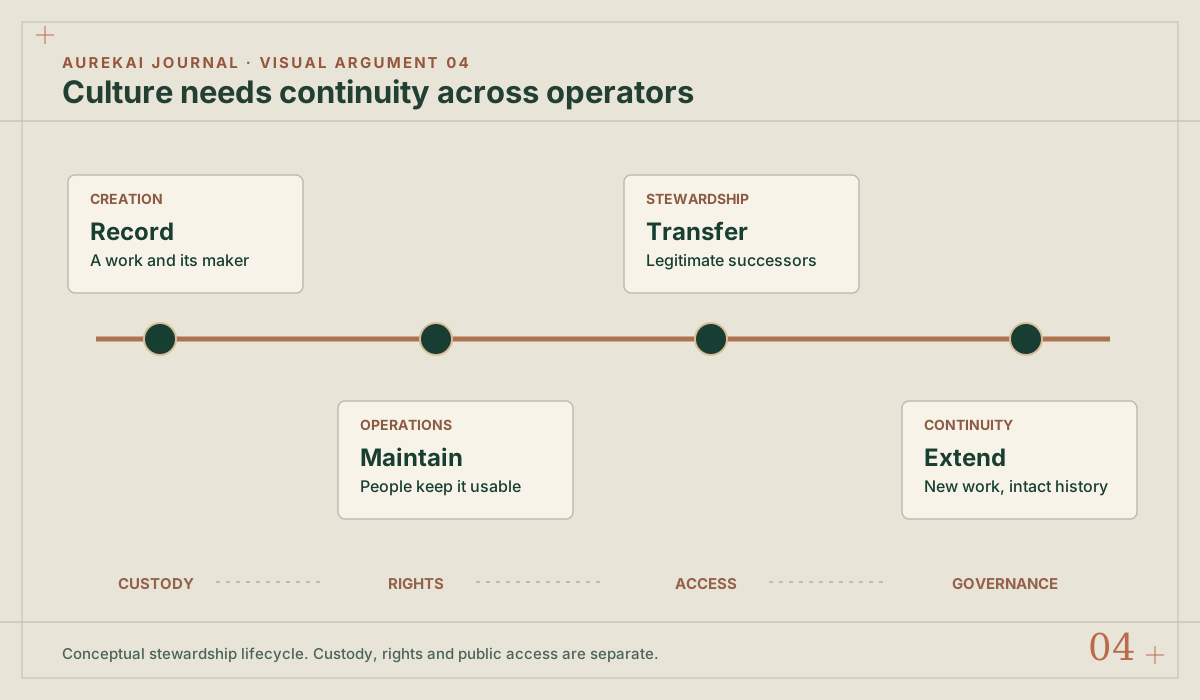
- What happensA copy has been saved
- What it missesPossession is mistaken for permission
- What could changeRecord custody, rights, and access separately
Organized workers have leverage §
The Writers Guild of America's October 2026 AI guidance[3] describes AI protections in its collective bargaining agreements. The 2026 Writers Guild of America East contract FAQ[4] explains a new requirement that certain licensing of writers' work for commercial AI training be disclosed to the Guild, with an opportunity for discussion. The scope is specific to covered agreements, not a universal law for all internet creators.
Its significance extends beyond the particulars. Individual contributors may have little bargaining power against distribution platforms or model companies. Collective negotiation can turn vague concerns about work, credit and compensation into explicit obligations.
An independent radio producer, clipper, forum operator or local publisher may need different organizations and agreements. Copying the structure of a Hollywood union would not automatically solve their needs, but the example shows why labor rights belong in a discussion of web infrastructure.
A platform should not confuse providing tools with owning work §
Aurekai's proposed creator and publishing tools could represent permissions, attribution, licensed continuations and revisions as part of the source's enduring identity. A creator could authorize excerpts or transformations with limits, and a public archive could present the available rights clearly.
That should not turn into a claim that recording a permission flag makes a contested legal question disappear. Agreements may have jurisdictional limits; historical rights can be uncertain; contributors may have different roles. A credible system must make room for review, disputes and withdrawals where appropriate.
The creator's work can survive a platform without becoming the platform's property. An archive can preserve cultural memory without presenting preservation as a blanket commercial license.
Read next: The clip is not the whole work and Who keeps the internet alive?.
Sources and further reading
References point to original material linked in the essay, not independently invented citations.
- Creative Commonscreativecommons.org↩
- UNESCO digital-heritage charterunesco.org↩
- Writers Guild of America's October 2026 AI guidancewga.org↩
- 2026 Writers Guild of America East contract FAQwgaeast.org↩
Related reading
More articles that explore this subject from another angle.
A structured record does not automatically carry permission to redistribute its contents.
Follow this connection ↗A licensing distinctionA public GitHub repository is not automatically open sourceAccess to source material and permission to reuse it are different things.
Follow this connection ↗Another essay leads hereWhen reading becomes participatingVisual storytelling explains complex ideas. Living publications could also help readers contribute, collaborate and act.
Read the earlier argument ↗Another essay leads hereDifferential privacy helps with a query. It doesn't decide who may own the data.What epsilon protects and what still needs source identity, consent and access rules.
Read the earlier argument ↗