Fieldwork Issue 01 · November 2026
Five stories
worth following.
An accounting app someone built for a parent. A room full of products. A city meeting archive. A creator with more material than time. A coding breakthrough that still needs a release.
The interesting work is often between the original source and the next thing a person can actually use. These five stories are drawn from our research and public applications. Follow whichever one catches your eye.
Read it your way
A story starts in one place. It rarely ends there.
Pick a topic below or read the issue from top to bottom. We link original public sources, explain what we can actually infer from them, and show the applications already under development. An outside statement is not a Bonfÿre capability, and a public example is not a customer deployment.
From a viral X post
The new accounting app is real. The books still have to add up.
A November 2026 post on X describes a parent replacing QuickBooks with something made using Codex. It captures a major change: people with modest programming experience can now build tools specifically for themselves.
That does not tell us whether the tool has reconciled a bank account, handled a reversal, preserved a record after a software update, or produced a report an accountant can rely on. Those jobs have different requirements from entering an invoice on a clean screen. It is possible to believe in the breakthrough while asking those questions.
THE CLAIMA business owner may be able to build an application instead of buying one.
Paraphrase of the linked X anecdote, not an audited case study
OUR QUESTIONWhat would make that application durable enough for another person's money?
Reconciliation · permissions · records · support
For us, this leads directly into the existing business-application work: the Frappe/ERPNext grammars, account-owned records and the cost of adapting software rather than inventing every domain concept again. The public example below addresses professional work evidence; it is related infrastructure, not a replacement accounting product.
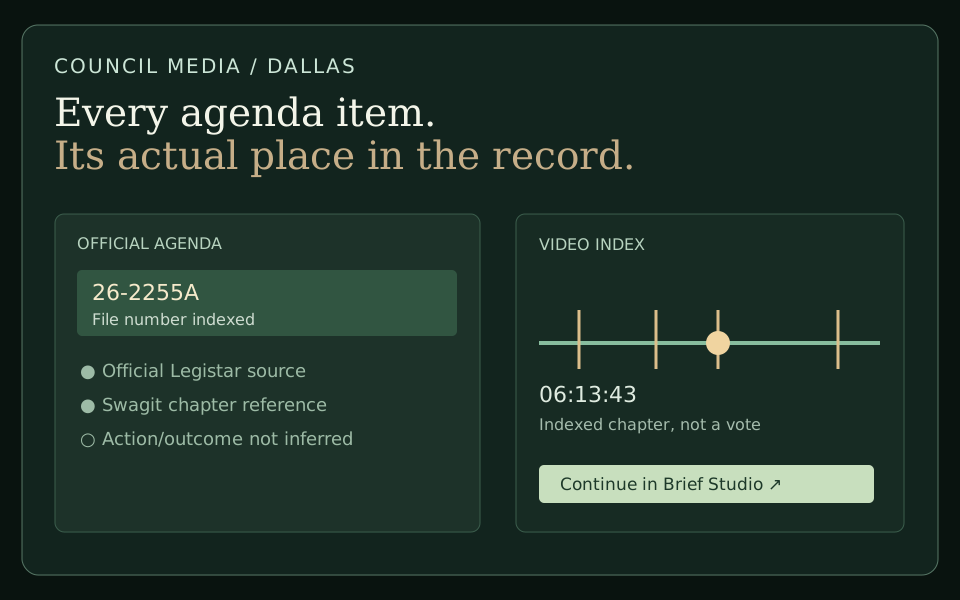
The meeting is only one part of the record.
From public records to a usable collection
A city council meeting should be easier to find again.
Meeting agendas, video, attachments and decisions are often spread across different systems. For a resident trying to understand a local issue, the challenge isn't a lack of information so much as knowing which record belongs with which discussion.
Our Dallas Council research has explored exact file-number joins, archived video chapters and the differences between indexed and available records. A confident story has to preserve those differences. A video mentioning a proposal is not a vote approving it; an automatically matched title is not a verified record.
The meeting's scheduled business
What was discussed, with timing and source
The official record when it is available
Corrections, questions and subsequent reporting
We also researched transparency tools around surveillance infrastructure. A useful public experience can help residents understand contracts, policies and costs without revealing individual movements or treating uncertain locations as confirmed facts.
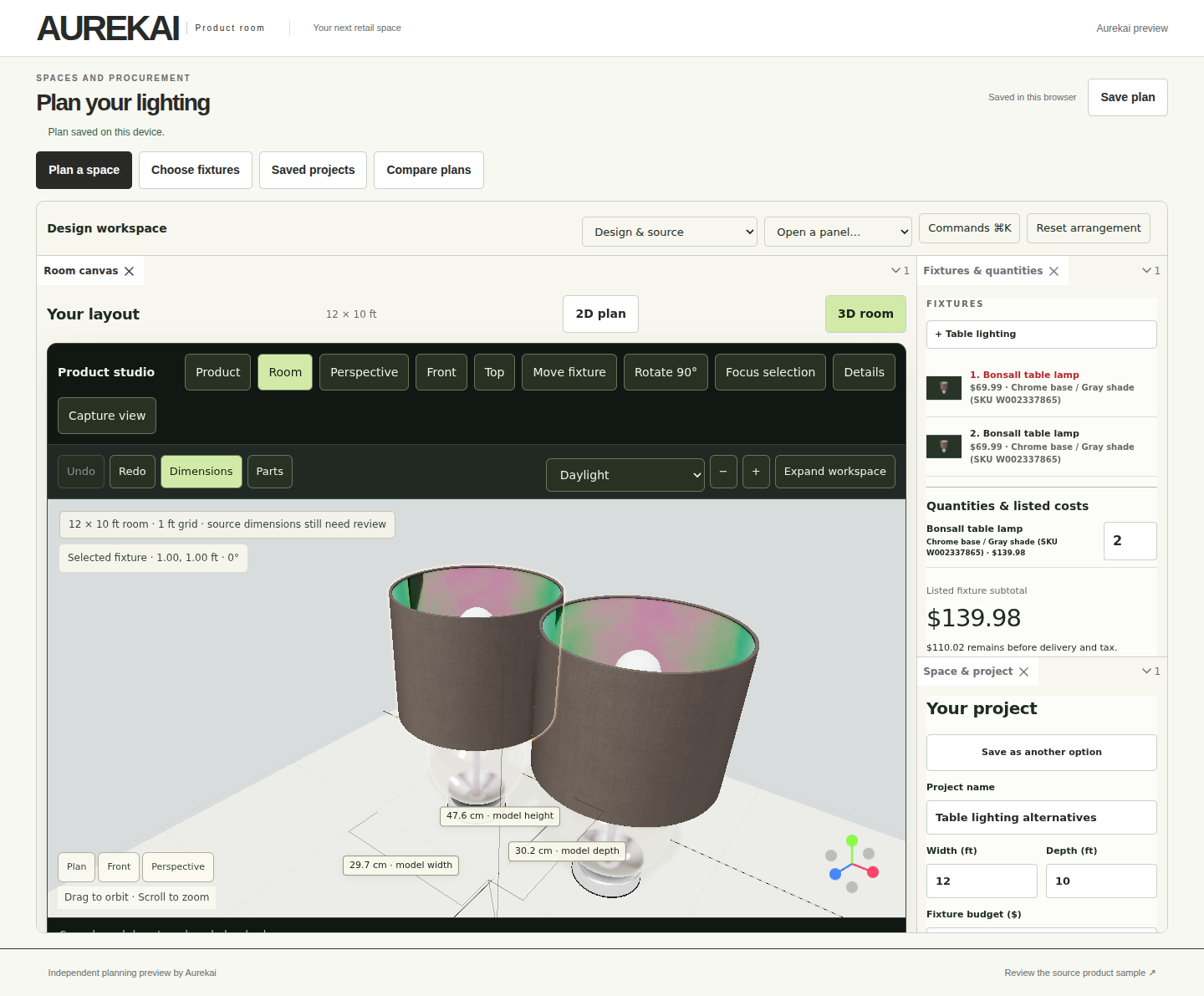
From a listing to a real room
The price is on the listing. The work is everywhere else.
A liquidation lot, a certified coin or a refurbished instrument comes with descriptions that look comparable until someone tries to buy, ship, inspect or resell the thing.
GSA Auctions shows how public surplus can be offered through structured listings, but each sale still has its terms and condition. NGC's guarantee gives an example of item-specific third-party claims that a marketplace should not silently substitute with a generic condition badge. A product's actual identity matters more than another listing card.
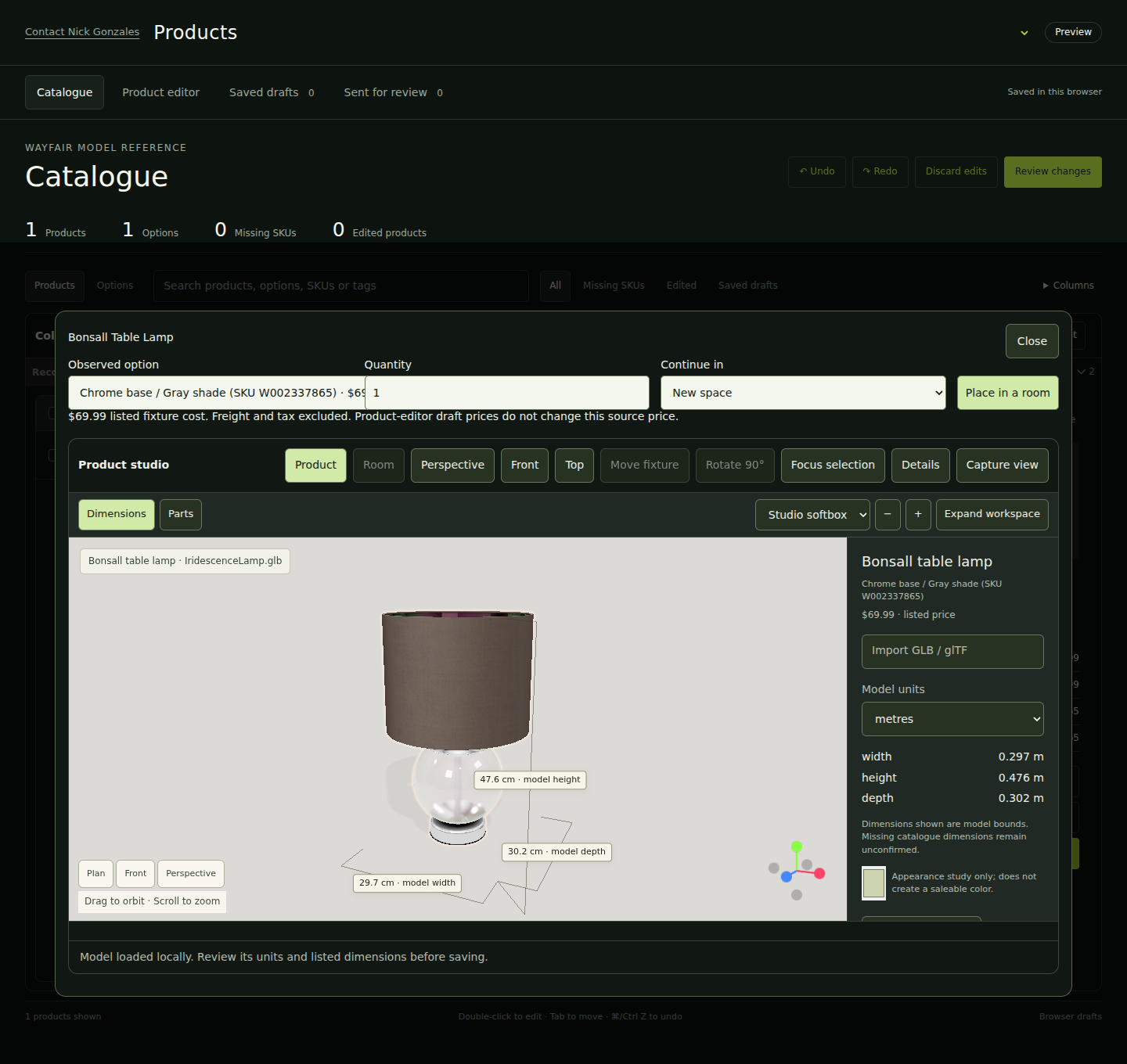
This is one reason we connect catalogue identities, procurement, room planning and seller information. A person considering an object needs to know what it is, what is claimed about it, and where it can be used. A room scene is useful when it retains the actual selected product.
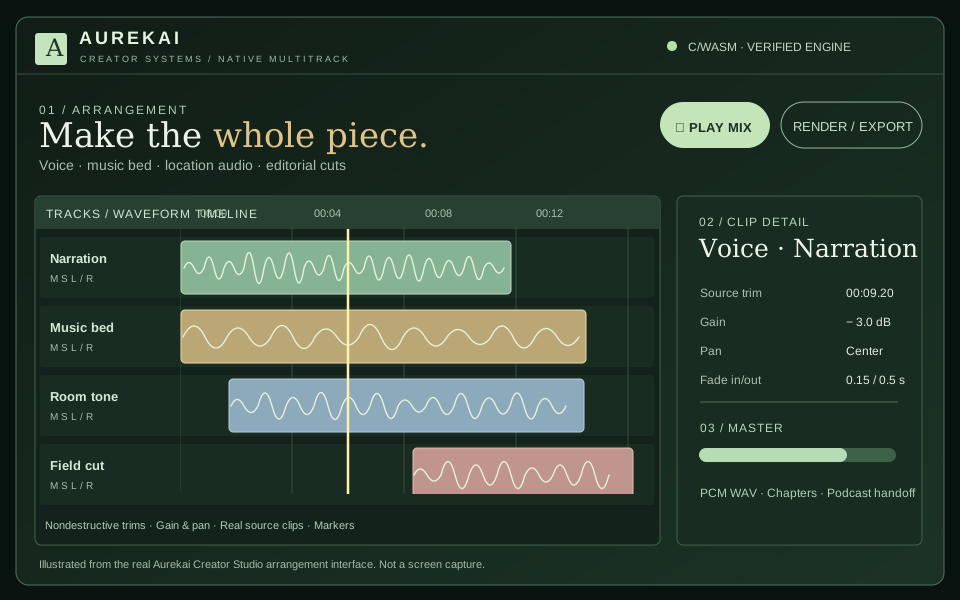
The file isn't the entire publication.
From a recording to a body of work
A good interview deserves somewhere to live.
A creator might publish a clip, the full recording, a transcript, a newsletter and a paid companion resource. Those should not become five unrelated copies of the same conversation.
The RSS specification remains useful for distributing new publications. It doesn't by itself preserve the people involved, licences, media sources or collection structure. That work belongs in the publisher's own archive and profile.
The creator experience we want is not an AI-generated feed of endless short clips. It's a coherent record of a person's output that can support writing, sound, community and business services while keeping the source discoverable.
THE ORIGINALAn interview with a participant, a date, a licence and the actual audio.
Original recording and its publication details
THE NEXT PLACESPodcast, transcript, profile, collection, article and offer.
Publishing applications / distinct uses
From a post about coding to a release
Hundreds of pull requests. What did the customer get?
Boris Cherny's December 2025 post described remarkable Claude Code output. Karpathy's original vibe-coding post helped name an important new style of building. The excitement is justified. What gets lost in many retellings is that code creation, integration and dependable service are different parts of the job.
The 2025 METR developer experiment showed a slowdown for experienced contributors under its particular conditions. Its 2026 update described evidence of improvement and why task selection made newer comparisons difficult. There is no honest universal multiplier for all programming tasks.
The code and source material
Which application uses it
What was built, tested and deployed
Whether someone completed the intended task
Writing code is one stage of delivering a useful system. Someone must also connect it, test it, release it and confirm that it works for its users.
Keep following the work
The rest of the research is open.
These five entries are a starting point, not a new database or a replacement for the journal. Explore the full Journal, try the public application examples and browse the code and reference libraries.
This editorial format draws on the visual argument and reader-led navigation seen in The Pudding's 2025 projects, the chaptered storytelling described in Vogue Business's Gen Z report case study, and the dual immersive/editorial navigation discussed in Webflow's scrollytelling examples. The writing and product images here are Aurekai's own, and external research links lead to the original publishers.